- Published on
Autonomous car: a BYD causes an accident, but the story ends in a completely new way
- Authors

- Name
- aimode.news
- @aimode_news
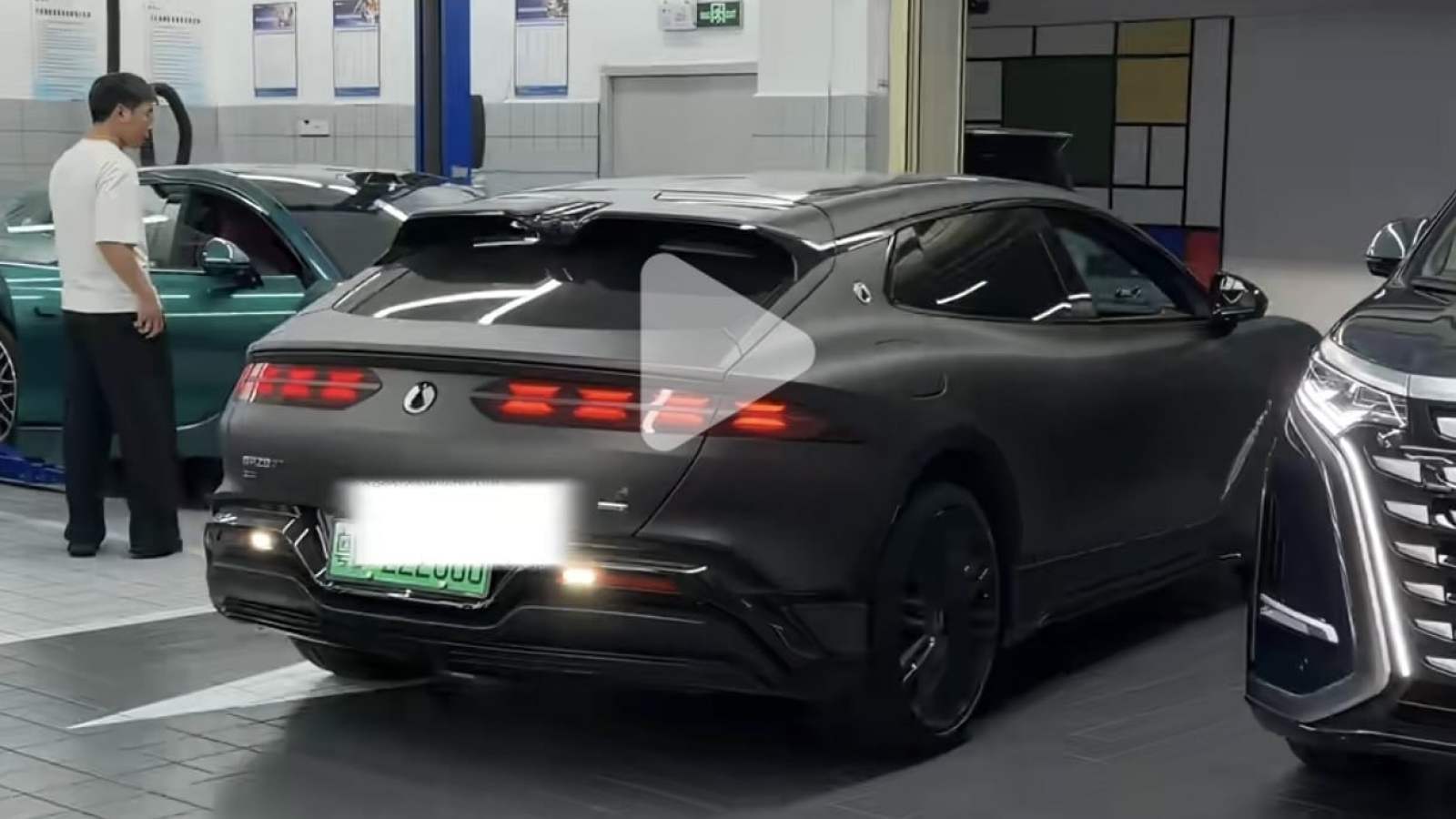
On May 28, 2026, BYD announced its “City Navigation Safety Net”: a one-year warranty fully covering direct damage occurring during an accident attributable to its automated driving system God’s Eye, in its versions A and B, a warranty which covers vehicle repairs, material damage caused to third parties, and bodily injury, with no reimbursement ceiling and no impact on the insurance premium for the following year. The next evening, 24 hours after the announcement, a Denza Z9GT owner was driving in Shenzhen, City Navigation function activated, when her vehicle hit the car in front of her. No emergency avoidance maneuver was initiated.
As reported by the Chinese media Gasgoo, the driver had to brake manually. The “Black Knight” protective film which covered the bodywork was damaged. The news quickly circulated on the networks: “Day 1 of the system, and we already have an accident. » BYD confirmed support as of May 30. Less than 24 hours from report to validation.
The procedure requires a double filing of a complaint (with the insurer and with BYD) then a technical inspection in an approved center, before liability is decided. Here, it was the system that was to blame, not the driver.
In a sector that evades its responsibilities, the gesture is rare enough to be highlighted
For years, the debate on liability in the event of an accident involving driver assistance has been going around in circles. Chinese legislation is rather clear: below level L2, the driver remains legally responsible. The system assists, it does not execute. In theory. In practice, manufacturers have long surfed on vague names (“L2++”, “L2.999”, “quasi-L3”) to sell dreams without assuming the slightest risk.
Also read:
Autonomous cars: what are the differences between the levels of autonomy?
In 2025, the Ministry of Industry and Information Technology signaled the end of recess, by imposing strict transparency obligations on the naming of systems. Terms like “autonomous driving” or “intelligent driving” have officially disappeared from brochures. But user distrust has not disappeared.
PICC Property and Casualty data for 2025 speaks for itself: the average cost of a claim involving driving assistance reached 47,000 yuan (around 6,000 euros), or 35% more than a classic accident. And most manufacturers continued to fall back on the vague definition of liability.
BYD chooses another approach. Not by modifying the legal framework (the driver's responsibility remains complete under the law), but by contractually committing to cover economic losses when his own system is involved. It’s a manufacturer’s warranty disguised as a safety net, and it’s a first on this scale.
To measure the extent of the commitment, a point of comparison: Tesla, whose “Full Self-Driving” (renamed “Tesla Assisted Driving” in China) remains a level 2 system, has never agreed to take on the slightest financial responsibility in the event of an accident. And BYD's God's Eye B option, priced at 12,000 yuan (about $1,770), costs almost five times less than Tesla's FSD in China, which sells for 64,000 yuan.
A bet on trust
Is this a historic turning point? Not really. BYD does not address the technical limitations of L2 level automated driving: blind spots persist, complex situations remain poorly managed, and driver vigilance remains essential. The first case with the Denza Z9GT precisely illustrated these flaws: the system did not anticipate the impact, and it was the driver who had to react.
What BYD is selling here is, above all, peace of mind. By taking care of the consequences of a malfunction quickly and without friction, the manufacturer seeks to remove the main psychological barrier to the adoption of these functions.
BYD had already launched an equivalent device for its automated parking system in July 2025. The risk, on the other hand, is real. If accidents multiply on a large scale, the model could quickly become expensive. And the temptation to minimize coverage or complicate procedures in the event of an influx of files cannot be ruled out.