- Published on
Between imagination and algorithm. It is Biedronka that sets the standards for the use of AI in creative work
- Authors

- Name
- aimode.news
- @aimode_news
The "Piórko. Biedronka Award for a children's book" competition has managed to develop a strong position on the Polish publishing market for over a decade. This is one of the most important initiatives supporting children's literature and promoting new talents. However, the 2026 edition marks a turning point – both for the competition itself and for the entire creative industry. For the first time, the organizers decided to introduce a separate category for creators using artificial intelligence. Thus, "Piórko" has become a platform not only for literature, but also for debate about the future of creativity.
The previous formula of the competition was based on the classic model: first, selecting the best text, then creating illustrations and publishing the book. In 2026, it was expanded to include a second path - "Innovation Feather". Next to it, there is still the "Feather of Imagination", a category intended for creators working without AI support.
The organizers clearly emphasize that the point is not to replace traditional creativity with technology, but to create space for both approaches. As indicated in the competition materials, "independent creators and creators using AI do not have to compete with each other" . This is a key assumption - instead of conflict, we have an attempt at coexistence.
– This year's Piórko competition differs from previous editions in practically everything, except that the best stories that engage children from four to 10 years of age win. First of all, we have introduced two separate competition paths - in addition to the current Piórka Imagini, intended for authors who create independently, we have the Piórko Innowacji for those who are supported by artificial intelligence in the creative process - emphasized Arkadiusz Mierzwa, director of corporate affairs at the Biedronka chain, member of the Piórko 2026 Competition Jury.
This change is part of a broader trend of redefining the concept of authorship. The introduction of AI into the literary competition means that creativity is beginning to be perceived not only as an individual ability, but also as the ability to work with tools.
The new competition structure is based on a clear division:
Feather of Imagination – for creators who rely solely on their own workshop,
Innovation Pen – for authors using AI tools.
The differences between them are not limited to the creative process itself. In the first path, the result is a classic printed book, available for sale. The second one is a digital publication, linked to the paper edition via a QR code.
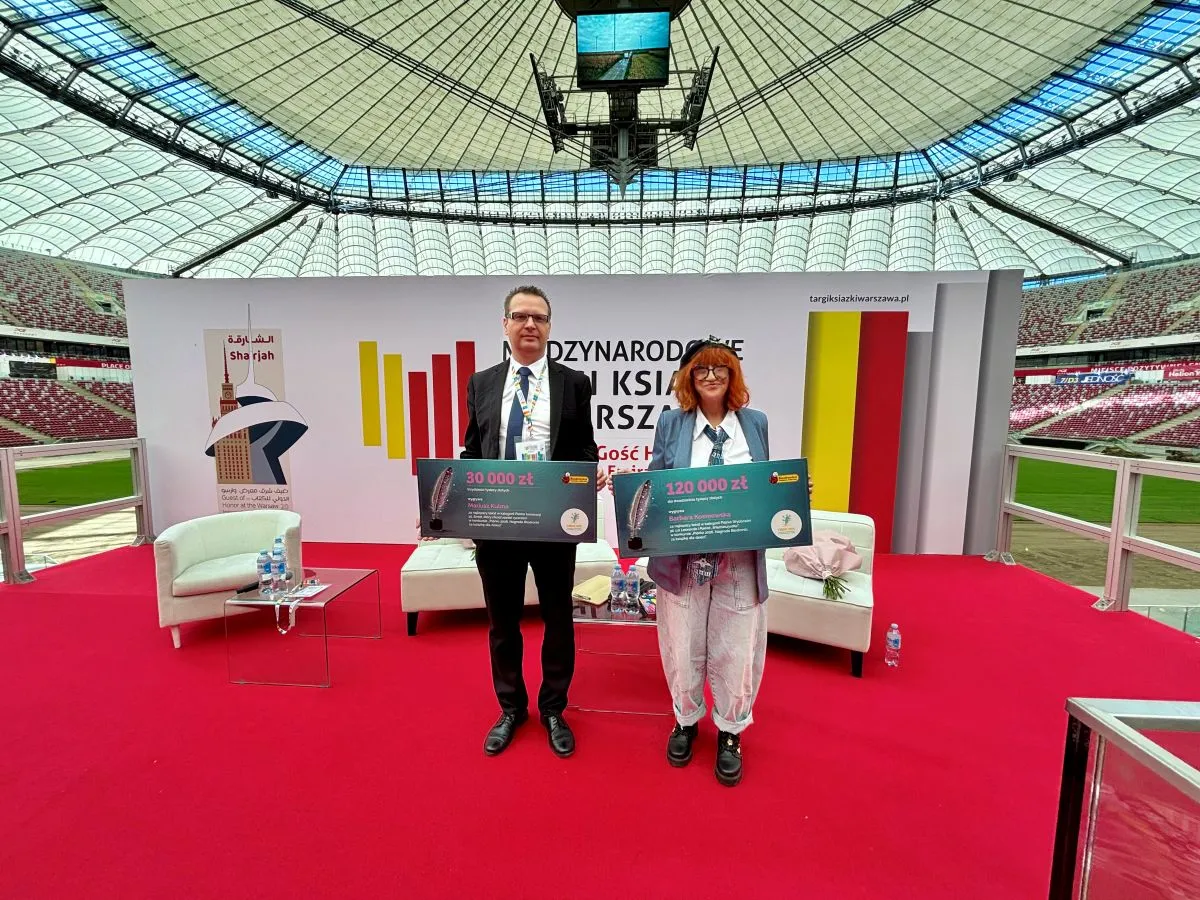
The rewards are also different. In "Feather of Imagination" they amount to as much as 120,000. PLN for the text and the same amount for illustrations, which makes them the highest in the history of the competition. In the AI category, the prizes are lower - PLN 30,000 each. PLN - which can be interpreted as an attempt to maintain a balance between tradition and experiment.
The issue of transparency is also important. Participants using AI must disclose the entire work process: tools used, prompts and raw results. The regulations require "significant own contribution of the participant", which is intended to prevent creativity from being reduced to simple content generation.
The winner in the Text Feather of Imagination category was Barbara Kosmowska for the story "Leonardo the Fox and Miss Know Everything". The Feather of Innovation went to Mariusz Kulma for the text "The Dragon Who Wanted to Become a Knight".
"Leonardo the Fox and Miss KnowEverything" is a story full of humor and linguistic finesse about a miserable fox who - although not perfect - faces problems that are close to every child. A subtle narrative and word play lead the reader through a story about empathy, relationships and the first steps towards independence.
In turn, "The Dragon Who Wanted to Become a Knight" takes readers to a world where dreams know no limits. It's a warm, sometimes touching story about how true heroism is courage, helping others and keeping promises. The great advantage of the piece is its humor and expressive supporting characters, such as the ironic pigeon Grzegorz.
AI as a tool
On the occasion of the Awards gala, a debate was held "AI in the creative process - more opportunities or threats?", which gathered the winners and jurors - Arkadiusz Mierzwa and Agnieszka Karp-Szymańska. The discussion, led by a representative of the Spider's Web editorial office, concerned the role of technology in children's literature, the limits of creativity and how artificial intelligence can support - or change - the creative process.
One of the most important messages from the 2026 edition is the redefinition of the role of artificial intelligence.
– It is not the case that we can immediately create a valuable book using artificial intelligence. You need to use various sources, psychological tests, and fairy tale therapies. There are many aspects that help in writing. I wanted to show it transparently that I used artificial intelligence to write this book and it resulted in success - said Mariusz Kulma in the debate.
Not as a replacement, but as an inspiring tool - this approach clearly defines the philosophy of the new category. In practice, this means that elements such as style, narrative and interpretation - everything that results from human experience - remain key.
This approach is consistent with a growing consensus in the creative industry: AI can increase productivity and open up new possibilities, but it does not eliminate the need for authorial vision.
Ms. Barbara therefore looks at writing in the context of "Piórek" as a purifying test for every writer - a moment when the achievements and name cease to matter, and only the "letters" and the story created for the young reader are defended.
– The deliberations were stormy. This year we were partly in agreement, that is, the winning texts really stand out. Maybe... this is always a bit of a sad situation, because we would definitely like to reward more texts. But well, there is only one prize and it is one that can change fate - emphasized Agnieszka Karp-Szymańska.
The competition as a voice in the debate on the future of culture
The introduction of the AI category is not just an organizational change. This is a conscious decision that fits into a broader debate about the future of art and literature.
As the organizers emphasize, the aim is to "have a say in the discussion about the use of AI in works of culture". In Poland, this topic is only gaining importance, but globally it has already become one of the key issues for the creative industries.
The "Piórko" competition therefore serves as a kind of laboratory - a place where new models of cooperation between humans and technology are tested. Thanks to the clear division into two paths, it is possible to observe differences and potential synergies.
The 2026 edition also brought a number of formal changes. One of them is the new range of text lengths - from 30,000 to 50,000. characters. As indicated, this is intended to provide "greater balance" and better suit the needs of young readers.
The availability of the competition has also been expanded. From this edition, authors who have already published works can also participate. This is a clear departure from the previous model aimed mainly at beginners.
However, this does not mean that it will be more difficult.
The jurors emphasized that the text of an absolute debutant fought for victory against the text of a professional until the very end.
However, the two-stage nature of the competition has not changed. First, the text is selected, and then the illustrations, which allows you to create a coherent book - the result of cooperation between various authors.
With the introduction of AI, new ethical challenges have also emerged. The organizers responded by tightening the rules.
Introduced, among others: strict verification procedures and the possibility of demanding the return of the prize in the event of violations of the regulations. Particular emphasis was placed on the honesty and transparency of the creative process.
Nowe Piórko focuses on honesty – towards itself, towards the audience and towards the artists. This is a declaration that shows that technology does not relieve creators of responsibility - on the contrary, it places new requirements on them.
– The competition is a great idea to promote what, in my opinion, is the most important in literature, i.e. books for the youngest readers. That's why the Biedronka competition was particularly important to me, I admire it for promoting literature for 12 years and focusing on this literary Cinderella. This is a way for debutants to become known, but also a way to derive great satisfaction for writers who have been writing for a long time and want confirmation of their talent or way of thinking about the modern world and their heroes - also explained Barbara Kosmowska.
What's next for creativity?
The 2026 edition of the "Piórko" competition is more than just another installment of a popular literary initiative. This is a signal that the creative industry is entering a new phase - the phase of coexistence of tradition and technology.
– I know, I realize that the decision was very difficult to create this innovation path, but this is a very good opening, so new, additional. I think that here the authors will be able to show their works, and then, of course, the jury itself will evaluate it, and of course the readers too, said Mariusz Kulma during the debate.
The introduction of a separate category for AI can be seen as a compromise. On the one hand, it protects the classic model of creativity, on the other - it opens the door to new forms of expression.
The most important question, however, is: will this model last? Will the division into "human creativity" and "AI-assisted creativity" still be necessary in the future, or will it become an anachronism?
For now, "Piórko 2026" shows that it is possible for both worlds to coexist. And that instead of competition, a conversation may be more productive - about what creativity is and how it is changing in the era of algorithms.
The "Piórko 2026" competition redefines the rules of the game in children's literature. The introduction of the AI category not only changes the competition formula, but also initiates an important debate about the future of creativity.
This is an experiment that may have long-term consequences - not only for the competition participants, but for the entire creative industry. Because the question about the role of artificial intelligence in art no longer concerns the future. It is happening here and now.