- Published on
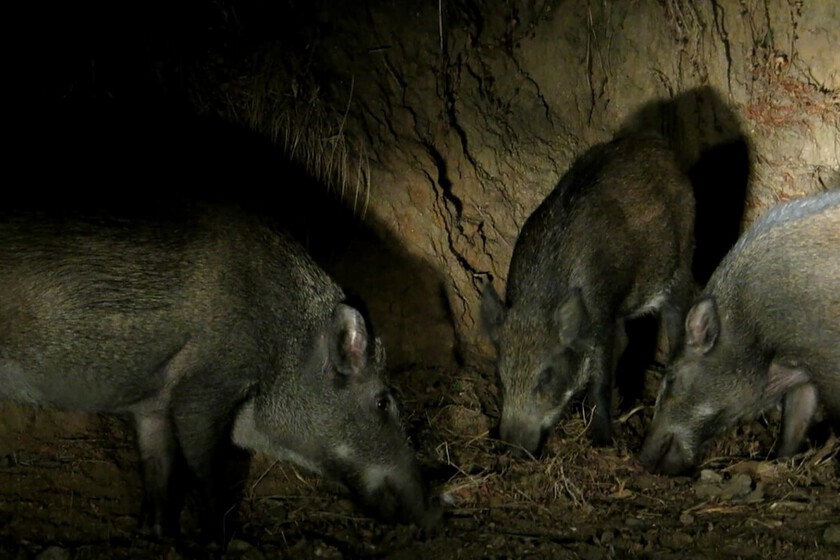
Doñana has a problem and the most expert hunters have the solution: an old trick to know what time of night the wild boars appear
- Authors

- Name
- aimode.news
- @aimode_news
In the Middle Ages, tracking a wild boar was such a valuable skill that some nobles spent days interpreting footprints, disturbed mud, and almost invisible signs to find out where the animal had spent the night. In fact, great boar hunts relied much more on reading the terrain than on force or weapons, a tradition that survived for centuries even after the emergence of more advanced technologies.
The trick that hunters of yesteryear used. Long before camera traps or drones existed, hunters resorted to simple and ingenious solutions to find out what time wild boars appeared. One of the most curious methods consisted of connecting an alarm clock to a fishing line placed next to a bait station.
When the animal moved a stone or touched the line while eating, the battery jumped and the clock stopped, recording the exact time of the visit. The system had limitations and could fail due to rain, other animals or simple mechanical errors, but it reflects the extent to which knowing the habits of the wild boar has always been valuable information for those who lived with this species.
A very adaptable animal. The obsession with understanding the wild boar has a simple explanation: it is one of the most adaptable mammals in Europe. Its varied diet, intelligence and high reproductive capacity allow it to thrive in forests, crops, marshes and even environments close to cities.
This ease of taking advantage of any available resource has driven the growth of its populations in recent decades and has turned the species into a constant challenge for wildlife managers, farmers, conservationists and hunters.
When population control disappears. The increase in specimens is especially visible in some protected areas where hunting activity was eliminated or significantly reduced. The ban on hunting in national parks was presented as a victory for conservation, but the passage of time has revealed that the absence of regulatory mechanisms can also cause problems.
The debate, therefore, no longer revolves solely around the protection of animals, but about how to prevent a particularly successful species from altering the balance of the ecosystem.
The alarm in Doñana. The most striking case is occurring in the Doñana National Park in Spain. Organizations such as Ecologistas en Acción and SEO/BirdLife have warned that nest predation by wild boars is affecting the reproductive success of protected species such as the common blackbird and purple heron.
The situation is especially striking because some of the groups that defended the elimination of hunting in these spaces are now those who warn of the effects of an increasingly abundant wild boar population.
No nests and threatened species. The damage does not only affect those birds. In various areas of the marsh, wild boars have accessed breeding colonies and have destroyed eggs and chicks of species such as the slender-billed gull, the black-winged stilt, the white-faced tern or the pratincole.
The wild boar's ability to locate food and take advantage of any opportunity makes these nesting areas especially vulnerable targets. Images of severely damaged colonies have reopened a debate that seemed closed about how to manage certain wildlife populations.
Nature does not understand ideologies. Beyond the accusations crossed between conservationists and representatives of the hunting world, the Doñana episode has put an uncomfortable question on the table: managing fauna requires practical decisions in addition to conservation principles. Hence the old alarm clock connected to a fishing line symbolized the effort to understand an animal that is difficult to observe.
Today the tools are much more sophisticated, but the challenge remains the same. The better we know the wild boar, the more evident it becomes that its extraordinary ability to thrive can become a problem when the mechanisms capable of maintaining balance with the rest of the ecosystem disappear.
Image | PXHere, Richard Bartz