- Published on
“It changed everything”: why did this Nvidia graphics card launch a small revolution 10 years ago according to Jensen Huang?
- Authors

- Name
- aimode.news
- @aimode_news
Nvidia may only have its eyes on AI anymore, but the company has its roots in designing graphics cards for PC gamers. From now on, GeForces have become “The best marketing campaign for Nvidia” according to Jensen Huang, because the current GPU are also very robust AI accelerators, just as capable in local inference tasks as in training small models.
This was the whole purpose of Nvidia's presence at Computex 2026, which was finally able to lift the veil on RTX Spark, its SoC designed with MediaTek and Microsoft for the “future of computing” according to Jensen Huang.
Present at the show all week, the president of Nvidia, as usual, generated crowd movements during his visit, like the AI rockstar that he has visibly become. During a signing session (yes, yes), we see him on video signing the graphics card which would have marked a real turning point for the company.
“One of my favorites”
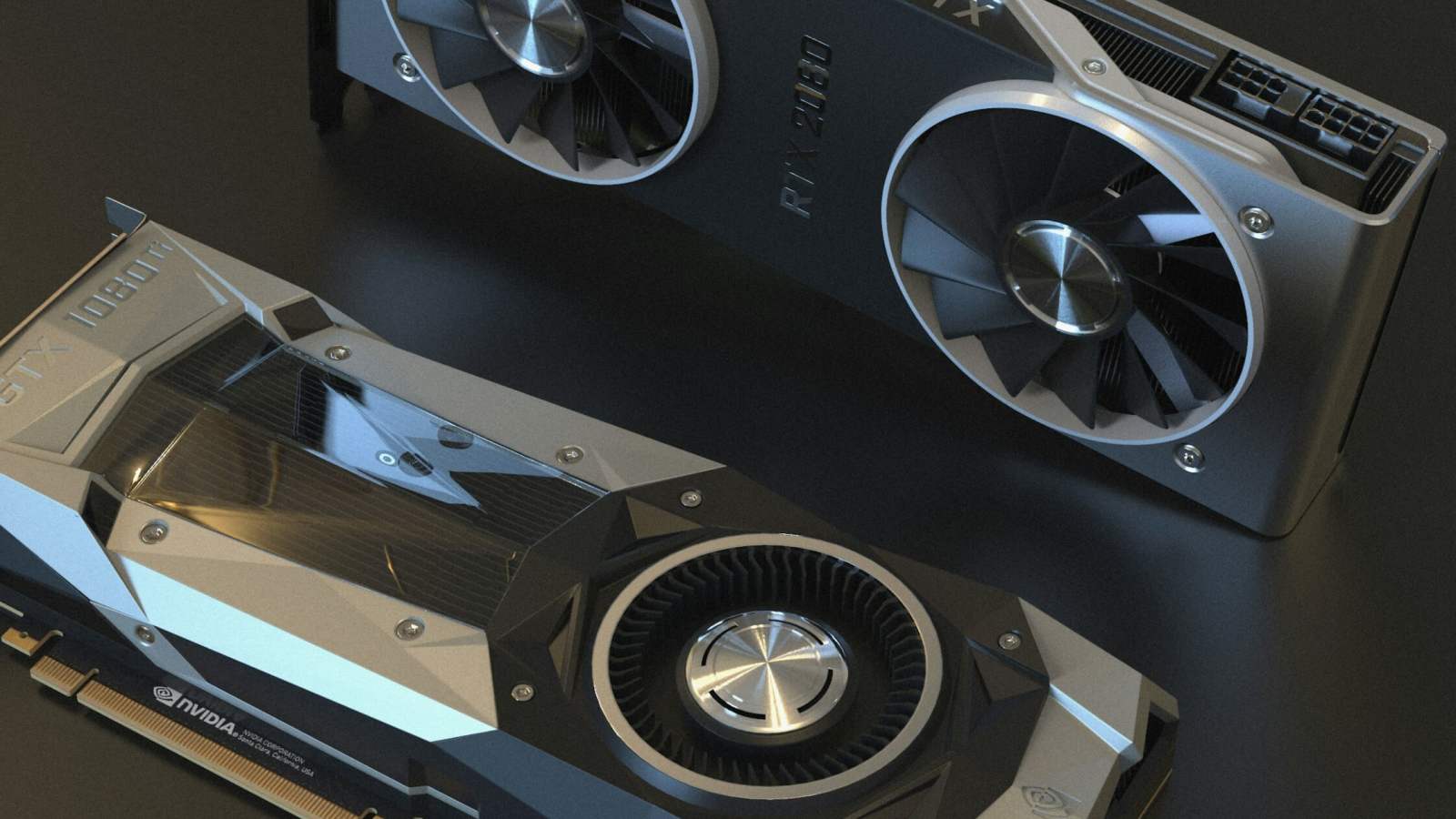
In a video from Xfastest (relayed by VideoCardz), we can see Jensen Huang signing a graphics card similar to a GeForce GTX 1080. We can hear him repeating that it is one of his favorites while concluding “It changed everything. »
The GTX 1080 recently celebrated its 10th anniversary, the card having been announced in May 2016 during the DreamHack e-Sports competition in Sweden. With the GTX 1070, it thus formed the golden age of Pascal architecture with its 8 GB of VRAM in GDDR5 and its 180W TGP.
Above all, it is the first card to benefit from a Founder's Edition version, the nomenclature now established for reference models built by Nvidia and not its partners.
The card arrived at a very rich time for PC gaming: The Witcher 3 was released the previous year, as was the port of GTA V. The GTX 1080 was released at the same time as Overwatch, Blizzard's competitive FPS which will be crowned game of the year in 2016. The GPU offers players performance never before seen on new releases like Doom 2016 or Rise of the Tomb Raider.
But if Jensen Huang says she “changed everything,” it’s for a completely different reason.
A GTX 1080 ready for the future of Nvid(IA)
If the beginnings of AI at Nvidia were felt as early as 2008 with the GTX 280 and especially in 2012 with the GTX 580, the Pascal architecture establishes a certain technical advance in the field before the surge of RTX generations.
The GTX 1080 had 2,560 CUDA cores delivering around 8.2 TFLOPS of power in single precision (FP32). At the time, almost all neural network training was done in FP32. The GTX 1080 offered an immense gain in raw performance compared to the Maxwell generation (the GTX 980 in particular), reducing training times from several weeks to a few days. It is on this generation of cards that today’s essential frameworks such as TensorFlow and PyTorch matured.
The GTX 1080 architecture introduced DP4A hardware instructions. For AI, this changed everything on the inference side. By converting a model from FP32 to INT8, the GTX 1080 could increase its execution speed by 4 to run AI in a less energy-intensive manner.