- Published on
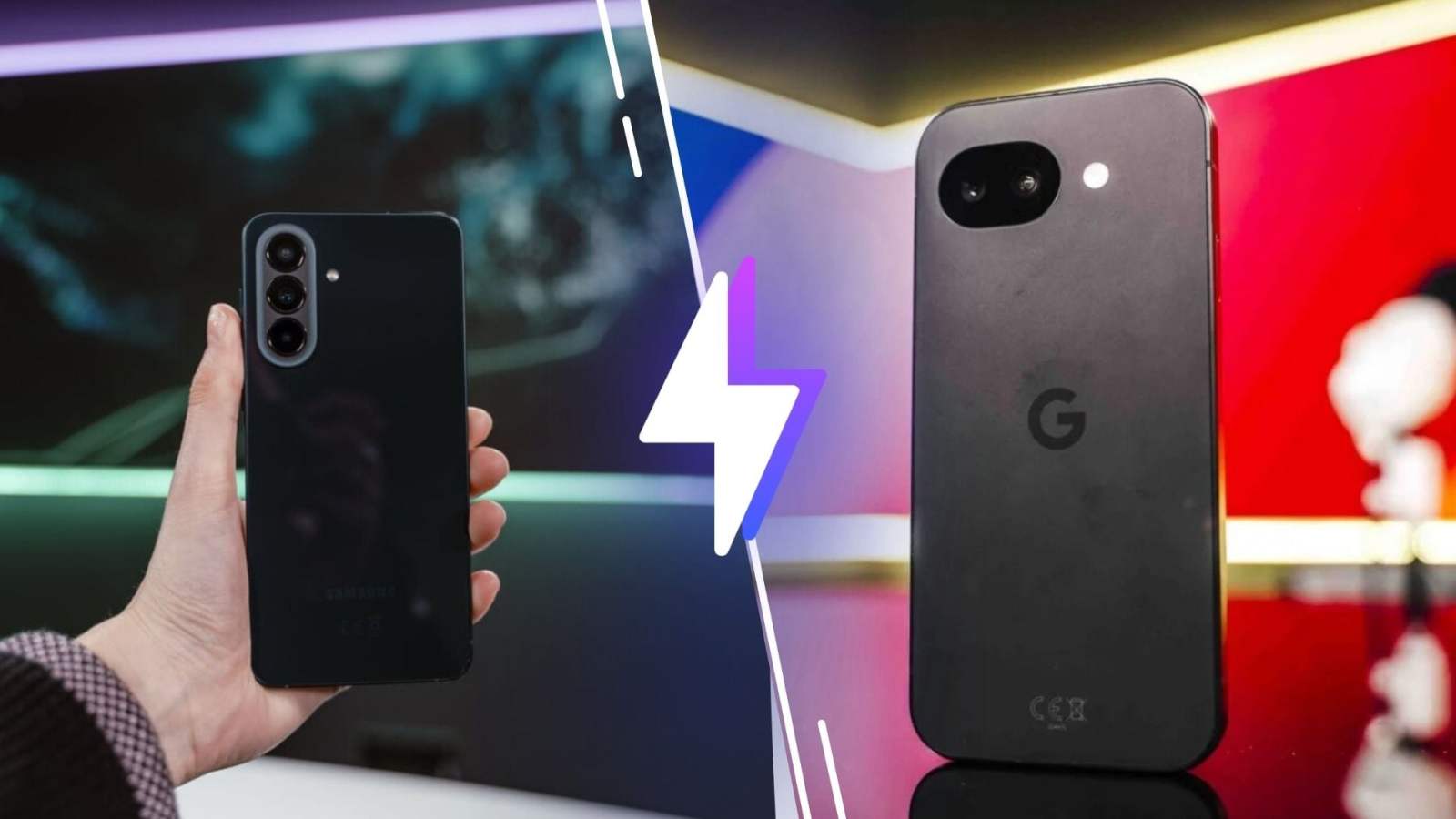
On sale for less than €500: should you go for the Google Pixel 10a or the Samsung Galaxy A57?
- Authors

- Name
- aimode.news
- @aimode_news
No revolution on the horizon, with the new Pixel 10a and Galaxy A57. Google recycles a well-known formula by taking the essentials of the Pixel 9a. At Samsung, the mid-range is getting a welcome slimming treatment, even if it still lags behind its rivals.
They still remain excellent everyday companions for users looking for reliability. Especially since with the current promotions, they both fall below the 500 euros mark. It remains to be seen which one really deserves to end up in your pocket.
What smartphones are on sale?
- The Google Pixel 10a Pack at 499 euros instead of 708 euros
- The Samsung Galaxy A57 Pack at 499 euros instead of 609 euros
Two successful smartphones but lacking audacity
Whether it is Google or Samsung, both manufacturers play the security card. This is particularly true at the Mountain View firm, which is content to recycle the formula of its predecessor almost identically, except for one detail: the rear photo block is now completely flat and no longer protrudes at all. For its part, Samsung has made a little more effort: the South Korean giant is offering a real slimming treatment to its mid-range, which is now 6.9 mm thick. This gives it the false air of a premium smartphone and we have careful work on the finishes.
It's not just the design of the Pixel 10a that is recycled, the photo module too. It uses the 48 Mpx main sensor and the 13 Mpx ultra wide-angle sensor from its predecessor. Here again, no material development, therefore. But image processing is clearly progressing: the AI, for example, manages to recover unexpected details in photos, and the contrasts are more marked than before. Samsung also lacks originality.
The photo part is in every way identical to that of the Galaxy A56. Despite equipment that does not evolve, the A57 allows you to obtain good quality shots in broad daylight, on all three lenses. We regret the absence of a telephoto lens, but that does not prevent you from photographing a fairly distant subject, thanks to a fairly efficient 2x or 4x digital zoom.
OLED panel and interface: which offers the best everyday experience?
The Galaxy A57 provides the essentials with its screen: OLED, Full HD+ and 120 Hz, everything that is most classic for a mid-range smartphone. The maximum brightness is also there and is high enough to provide good readability under the sun. With the Pixel 10a, things don't change: the panel is still OLED, 120 Hz (LTPS) and measures 6.3 inches. The new thing is that the screen offers a record brightness boost approaching 3,000 nits. On the other hand, we regret its screen borders which are still too pronounced, while Samsung has refined the screen borders on its model.
On the software side, the 10a does not stand out with its 9/10 in our test. The Android 16 and Material 3 combo works wonderfully: there are a bunch of AI features like Photo Coach, Auto Best Take and editing via Nano Banana. The addition of satellite SOS and QuickShare compatibility with Apple is a real plus. As for software longevity, it is impeccable, with 7 years of updates, we have a smartphone that is reliable over time, just like with the Galaxy A57 which also enjoys good longevity (6 years). Moreover, the One UI 8.5 system, based on Android 16, is effective. There are some AI-boosted features, but it's quite limited, compared to Galaxy S models or some competitors.
Performance and autonomy: timid but controlled developments
A new smartphone logically presents a new processor. However, this is not Google's strategy on its Pixel 10a. It recycles the Tensor G4 from the Pixel 9a to optimize a still operational SoC and also for cost reasons. So no Tensor G5… but the 10a behaves very well. No slowdown, everything launches quickly and you can even play fluidly. For its part, Samsung chooses the Exynos 1680. A chip that is less fast than its rival but which offers good responsiveness, whatever the tasks performed. And its temperature remains reasonable during prolonged demanding work.
In terms of autonomy, Samsung remains classic and retains a 5,000 mAh battery. We therefore have autonomy limited to one day (two at best, if you use the smartphone little). With 5,100 mAh, Google's Pixel 10a does slightly better. Autonomy remains solid, allowing you to get through a day without too much worry. Finally, on the charging side, Samsung takes the advantage with a maximum power of 45 W, compared to 30 W for the Google model.
So… Google or Samsung?
There is no shortage of qualities on either side, especially since each offers a successful experience.
We're not going to lie: Google was a little lazy in almost copying and pasting the design and photo sensors of the previous generation.
It remains a very reliable and solid smartphone that does the job: it will please people for its super bright screen, its ultra-smooth interface and its photo quality which always makes everyone agree at this price. You will just have to deal with a slightly tight battery and a charge that takes its time.
Samsung has made a visible effort on the design by refining the phone, which allows this model to come a little closer to the style of the Galaxy S range. It is pleasant to look at and light in the hand, all supported by the One UI interface which remains very pleasant on a daily basis.
On the other hand, this careful aesthetic comes with some concessions. The smartphone is a little behind in terms of pure performance, its autonomy is less impressive than that of previous generations, and the camera doesn't dare much compared to the competition. We think in particular of the Nothing Phone (4a) Pro or the Xiaomi Redmi 15 Pro+. It is a choice more focused on aesthetics and comfort.
If the smartphone from Google or the Samsung brand has not convinced you, there are other models in the same price bracket. To discover them, we invite you to consult now our guide to the best smartphones under 500 euros at the moment.