- Published on
SK Hynix to double wafer production capacity amid AI memory shortage
- Authors

- Name
- aimode.news
- @aimode_news
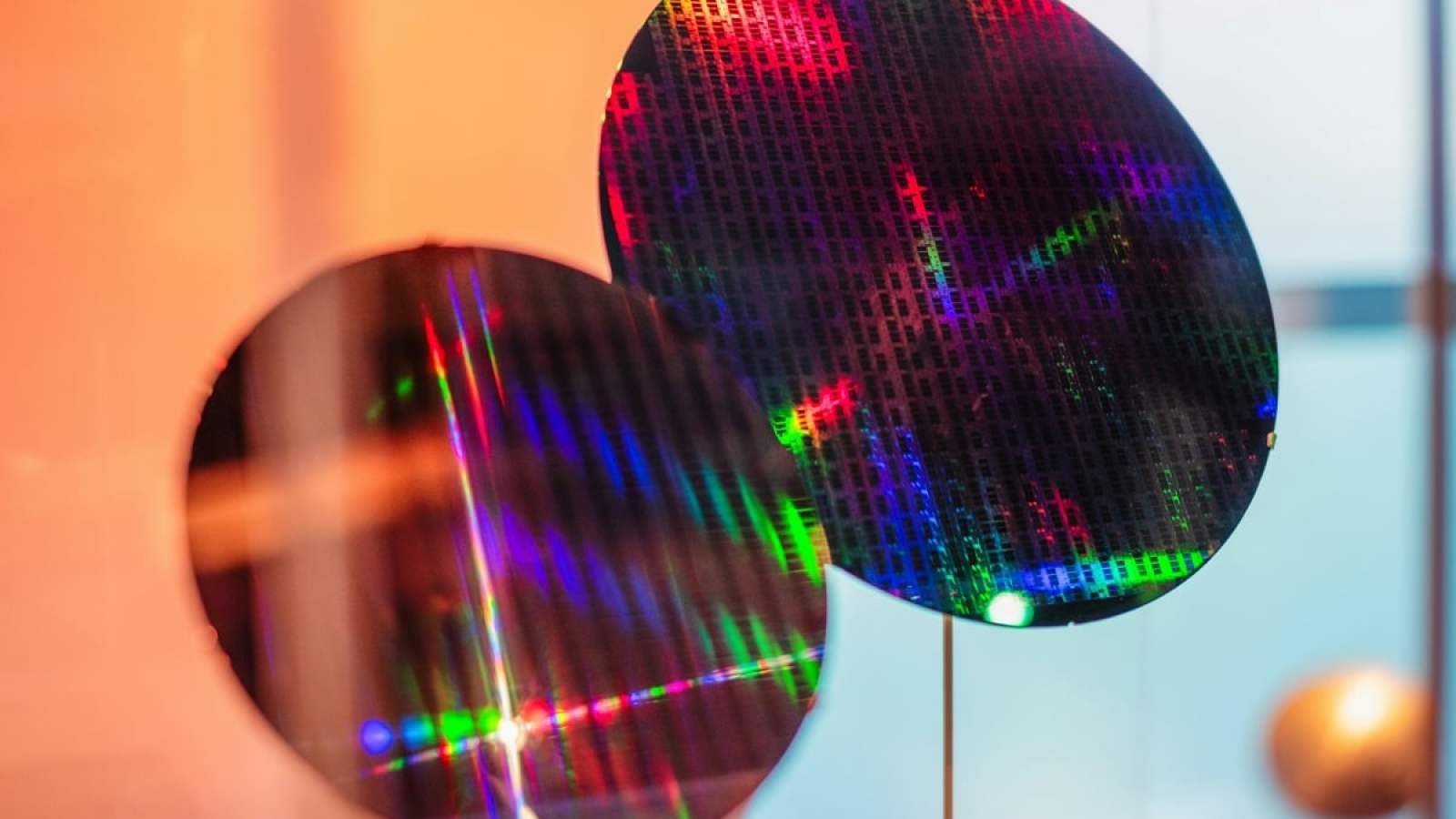
It was on the sidelines of the Computex 2026 exhibition in Taipei that Chey Tae-won, president of the SK Group, took the floor to announce an unprecedented expansion plan. According to the manager, SK Hynix intends to double its entire memory wafer production capacity over the next five years, without specifying the total amount of investments necessary.
Remember that this declaration comes in a context where the South Korean company has already exhausted all of its memory production for the year 2026, entirely monopolized by demand from large cloud operators and chip designers.
According to the manufacturer, the memory shortage linked to AI is not a passing phenomenon. Chey Tae-won reaffirmed his prediction. According to him, the tension in the memory chip market could continue until 2030, an estimate that he had already made during the GTC Nvidia in California in March 2026.
To go further
DDR6 RAM production begins, with release window
Colossal investments already committed
Far from waiting, SK Hynix has already increased its financial commitments in recent months. Last year, according to the company, the group announced a $129 billion investment plan in South Korea, aimed at expanding advanced memory production over several years. In February 2026, the board approved an additional envelope of approximately $15 billion specifically allocated to the production of HBM (High Bandwidth Memory) and advanced DRAM for 2026 alone.
On the equipment front, SK Hynix placed with ASML the largest individual order ever made public for EUV lithography machines: $7.9 billion for approximately 30 new pieces of equipment, deliverable by the end of 2027. These machines will be deployed at two sites: the M15X factory in Cheongju, dedicated to the production of HBM chips, and the new Yongin semiconductor cluster for advanced DRAM. According to industry sources, SK Hynix even pays a premium of 15-20% above the standard price to get expedited deliveries.
To go further
Nvidia wants to defeat Apple and Qualcomm: here is the RTX Spark roadmap until 2030
HBM memory at the heart of the battle
HBM — the memory architecture that stacks chips vertically to provide dramatically greater bandwidth — has become the most sought-after component in the semiconductor industry. It is widely used in AI accelerators and high-performance computing servers.
SK Hynix has established itself as the undisputed leader in this segment. According to the manufacturer, the company is notably the exclusive supplier of HBM memory for Microsoft's Maia 200 AI chip, and one of Nvidia's preferred strategic partners. This dominant position allowed it to exceed the symbolic bar of $1,000 billion in market valuation for the first time, thus joining Micron in this very exclusive club.
New capabilities too late
However, taking a step back, we see that even by doubling its capacity, SK Hynix will not be able to resolve the shortage before the end of the window of tension that it itself foresees. Indeed, the construction of a new manufacturing plant from scratch takes more than five years, which makes it possible to envisage new deliveries at best by 2030-2031. Furthermore, growth in global memory production is expected to reach 7.5% in 2026 and 2027, well below the 12% needed to absorb demand.