- Published on
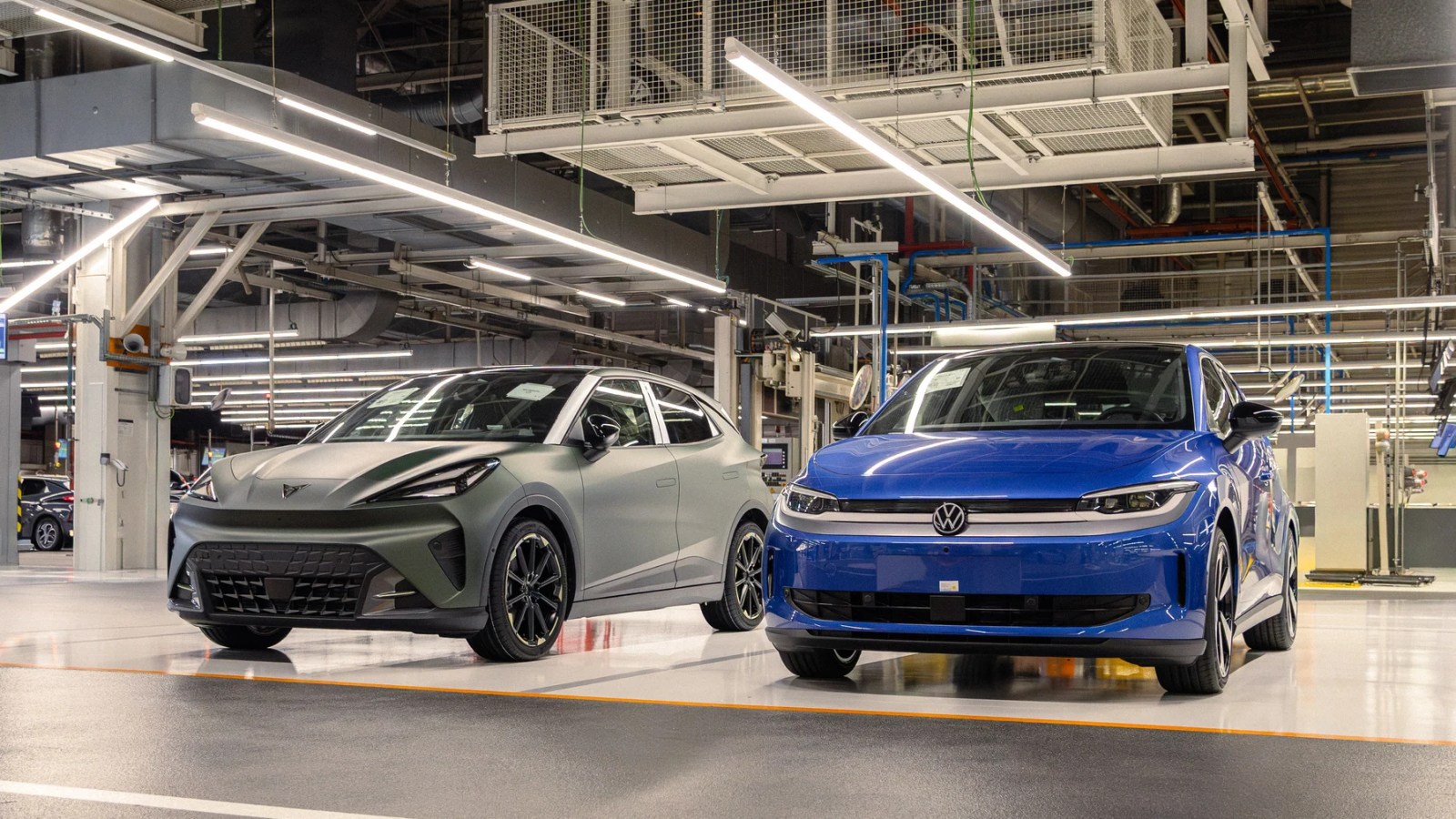
The production of Volkswagen IDs. Polo and Cupra Raval started to counter the Renault 5, but the promise of €25,000 is not kept for the moment
- Authors

- Name
- aimode.news
- @aimode_news
The ceremony was neat, the speeches well-rehearsed, and the political representatives in the front row: Pedro Sánchez, the Spanish Prime Minister at the head, alongside Oliver Blume, the boss of the Volkswagen group and Markus Haupt, the CEO of Seat and Cupra.
But behind this pretty display, the start of production of the Volkswagen ID. Polo and the Cupra Raval in Martorell is more important than it seems: it is the reconversion of a factory historically dedicated to thermal engines to electricity.
Seat has invested more than 3 billion euros, adapted some 160,000 m² of surface area, integrated a thousand new robots and installed 60 stamping tools. In short, the investments are colossal, and undoubtedly well thought out given the group's current financial situation.
One platform, two electric cars
Both models are based on an adapted version of the famous MEB platform, called MEB Entry or MEB-Small, an architecture designed to maintain costs and make electric more or less accessible with a base price below 25,000 euros.
Visually and commercially, even if they are based on the same platform and include almost all of the components, the ID. Polo and the Raval stand out, one in the purest Volkswagen tradition with assumed pragmatism, the other under the more sporty Cupra label.
Initially, only the version with the largest battery (52 kWh for up to 450 km of WLTP range) will be marketed; entry-level variants, starting at 25,000 euros, will arrive later.
A classic sequence in the industry, but which can leave the most price-sensitive buyers waiting for a few more months. For now, the ID. Polo starts, in France, from 35,820 euros, excluding bonuses. We can't say that it's really cheap for an electric city car. Same thing for the Cupra Raval which starts at 33,600 euros before aid.
There remains a major downside: at these prices, the two Spaniards face head-on the Renault 5 E-Tech, already on sale and best-seller in the segment in Europe, but also the MG4 or the Alpine A290. On paper, the ID. Polo and the Raval defend greater autonomy and recharging (up to 105 kW in direct current, 10 to 80% in 24 minutes), but they arrive more expensive and later on their truly affordable versions.
A new role for Seat/Cupra in the group
What is perhaps more interesting in the long term is the position that Seat/Cupra has carved out for itself within the Volkswagen group. The Spanish division is taking the lead in developing a platform for the group for the first time: it will oversee not only the two models produced in Martorell, but also the future Volkswagen IDs. Cross and Skoda Epiq, manufactured in Pamplona.
It is difficult to know if this will result in real technical autonomy or if Wolfsburg will keep control of the structuring decisions.
On the supply side, Seat also highlights the Iberian roots of the project: more than 90 Spanish and Portuguese suppliers contribute to the two models, representing around 70% of the material costs. A significant industrial and political argument, in a context where the sovereignty of the European automotive value chain is more than ever scrutinized and gives rise, or not, to government subsidies to, precisely, maintain more or less acceptable prices.