- Published on
The shadow ally: why Nvidia couldn't create RTX Spark without MediaTek
- Authors

- Name
- aimode.news
- @aimode_news
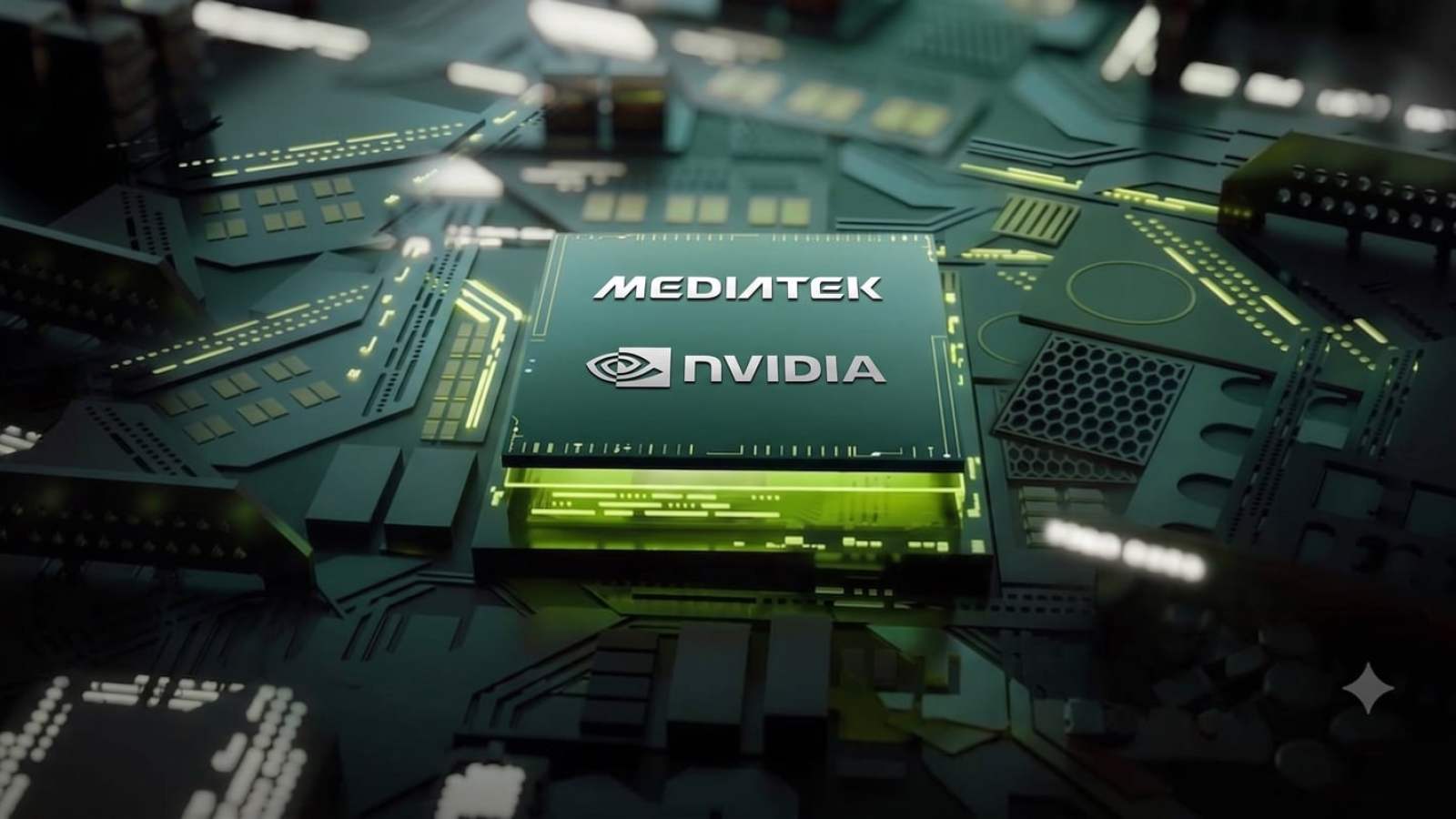
Nvidia's media stunt at Computex has a name: RTX Spark. This new architecture wants to compete with Apple and Qualcomm in the hope of democratizing ARM on PCs against Intel and AMD. A long-standing project for Nvidia which has partnered with the well-known company MediaTek for the occasion.
However, MediaTek seems considerably invisible in the announcements, largely leaving its place to Microsoft as part of the official RTX Spark announcement. The Taiwanese semiconductor company is nevertheless a historic player in the sector, collaborating with the largest manufacturers of smartphones, screens, TVs, e-readers, PCs and many others.
Nvidia and MediaTek have nevertheless hammered it home: RTX Spark is the fruit of almost 6 years of work, a long-term project which takes its origins in a radically different era.
MediaTek, spearheading the mobile ARM architecture
When we think of a chip manufacturer using the ARM architecture, regardless of the target device, we often think of Qualcomm. The American company is apparently hegemonic in the field of mobile technology, whether we are talking about processors, SoCs or even wireless connectivity chips (4G, 5G, WiFi).
But for a whole range of products, notably the entry and mid-range, it is MediaTek which has imposed its portfolio. The company captures between 30 and 40% of the global market share in terms of volume, the leading supplier ahead of Qualcomm and Apple. MediaTek has long been confined to the entry-level, its Dimensity architectures can be found with many historic customers such as Xiaomi, Redmi and POCO.
In recent years, MediaTek has expanded its positioning to provide architectures for the mid- and high-end at Vivo, Oppo, OnePlus and Realme. The recent Dimensity 9500 and 7500 architectures are proof of this: the company no longer wants to be latecomers on Android flagships. MediaTek is also a preferred partner of Meta for its connected glasses, demonstrating its versatility and desire to invest in new avant-garde markets.
Just like Nvidia, MediaTek is a so-called fabless company, in that it designs its architectures but remains dependent on foundry partners for their large-scale manufacturing. By using the basic plans from ARM (notably the famous Cortex or more recently AC1 cores), it has gradually become an essential partner for architecture that wants to supplant x86 hegemony.
However, it is still struggling to make its mark in the PC universe. Although the company was for a long time confined to the Chromebook category, its work nevertheless allowed it to cross paths, and the skills, of a now lasting partner: Nvidia.
From Chromebook to RTX Spark, the culmination of a project
Nvidia and MediaTek signed an unexpected partnership in 2021 to couple MediaTek's ARM processors with GeForce RTX 30 series graphics chips in Chromebooks of a completely different category. The objective: to transform the image of these low-cost portable PCs to bring them into personal computing through creation and video games.
If this work ultimately did not lead to Chromebooks designed jointly by MediaTek and Nvidia, the project was ultimately founding for the five years that followed. Two years later, in 2023, an Nvidia chip was integrated into the Dimensity Auto platform for the autonomous vehicle market.
The following year, Nvidia and MediaTek announced that they were partnering again, this time for G-Sync Pulsar technology, which aims to offer fluidity never before seen on LCD gaming PC screens. The G-Sync chip will then be directly integrated into the MediaTek scaler, in a single module simplifying the production chain.
To go further
Why my next display should feature Nvidia's G-Sync Pulsar technology (but maybe not yours)
We will quickly learn that the two companies have been working for a while on a common SoC, based on ARM architecture, for laptop PCs. An initiative which will mark the great return of Nvidia in the field of integrated GPU, but also MediaTek's first foray into this market.
For the Taiwanese giant, the stated objective is clear: to add a new string to its bow, after having dominated the entry-level PC via Chromebooks, by designing a processor designed for the Premium segment. MediaTek then works hand in hand with Nvidia for the design of this part CPU “contributing to its energy efficiency, its performance and its first-rate connectivity”.
The shadow partner
However, MediaTek is only mentioned once in the official announcement article on the Nvidia website, compared to 13 (!) times for Microsoft. However, it provides the heart of the processor architecture, its power management, its memory controller as well as all its wireless connectivity (Wi-Fi, Bluetooth).
Nvidia is certainly not new to ARM processors and already designs its own chips for data and computing centers. Its latest Vera architecture is even poised to elevate the company to the rank of leading processor supplier in the world ahead of Intel and AMD.
However, designing a consumer chip is a very particular challenge, so much so that a partner like MediaTek is a valuable ally for Nvidia and even the one through whom everything becomes possible. The collaboration is based on a shared lack: Nvidia does not design its consumer processors while MediaTek relies on graphics architectures from ARM (Immortalis, Mali) for its various chips.
These last six years have therefore been an opportunity for the two players to pool their expertise, fill their gaps and offer a solution which, we hope, will significantly advance ARM computing for the general public. The famous “Apple Silicon moment” is still awaited.