- Published on
With Smart Play, LEGO wants to make its Pokémon “alive”: good idea for children, but adult fans may frown
- Authors

- Name
- aimode.news
- @aimode_news
After Star Wars, LEGO brings Smart Play to the Pokémon license. Except that between the idea on paper and the small speaker hidden in a brick, there is a world of difference.
Concretely, LEGO and The Pokémon Company lifted the veil on June 2 on twelve boxes, already up for pre-order and launched on August 1, 2026 in France.
Prices range from €14.99 for the small Jigglypuff Concert to €119.99 for the Charizard against Jolteon, the most muscular confrontation in the range.
The range is generally aimed at children (6 years and over depending on the sets), where the first wave, launched on February 27, 2026, played the adult collector's card 18+. The link is the Smart Play system: light, sound, movement and detection, all without a screen, with more than twenty in-house patents according to LEGO.
A technology already seen at CES 2026, which arrives here on a license designed to make parents fall in love.
To go further
“We started with play”: Why LEGO got it all right with its Smart Brick
Smart Play, the argument that must carry everything
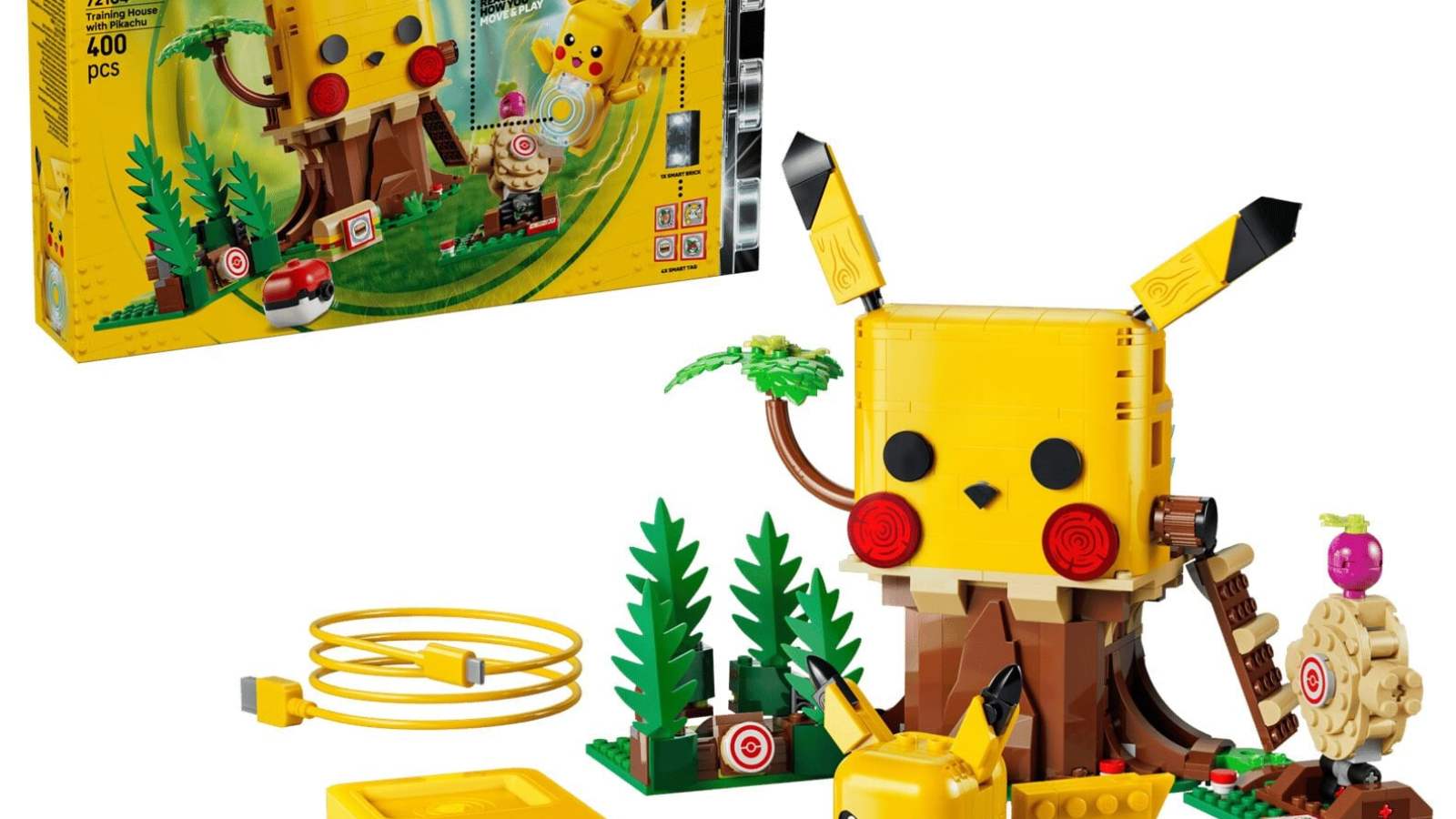
The real novelty is not the brick, it is the electronic layer. Of the twelve sets, only two include the famous Smart Brick, the sound and light brain: the Training House with Pikachu at €69.99 and the Charizard against Jolteon at €119.99. The other ten just use Smart Tags and assume that we already have the brick. In other words, the actual entry ticket is not €14.99, but rather around €70 when you start from zero.
To situate the evolution: the first wave in February was aimed at adult collectors with presentation models, including the Kanto trio Venusaur, Charizard and Blastoise priced at €649.99. This second Smart Play wave radically cuts prices to target families, but adds a paid electronic layer that did not exist before.
On the speech side, LEGO talks about “living” Pokémon which “respond” to the player. In fact, these are pre-recorded sounds and some light animations. It's fun for two minutes, but the sound reproduction is nothing like a selling point, at best just another toy that makes noise.
Another limit rarely highlighted: the Smart Brick, the electronic heart of the system, only offers around 45 minutes of autonomy per charge according to the official Training House with Pikachu sheet. It also has a microphone, deactivated by default and presented as a reserve for future functions, which is worth keeping in mind for a toy intended for children.
To go further
I played LEGO with the Smart Brick: the possibilities are endless, the crush is enormous